Disputes that arise over trees between neighbours are more prevalent than many people realise, often resulting in unnecessary stress that could be mitigated. As seasoned arborists, we frequently receive queries from both parties involved in these conflicts. In many instances, these disagreements could have been resolved more swiftly through accurate information and a simple conversation. This extensive guide provides vital insights into effectively navigating tree disputes in New South Wales (NSW), detailing proactive steps you can take before the situation escalates.
Essential Reminder for Navigating Tree Disputes
The information contained within this article is general in nature and should not be construed as legal advice. Each tree dispute is unique, encompassing specific facts and circumstances. If you find yourself in a serious disagreement, it is imperative to consult a qualified solicitor before progressing further.
Understand the Legal Framework Governing Tree Disputes in NSW
In NSW, the Trees (Disputes Between Neighbours) Act 2006 (NSW) establishes the legal foundation for addressing tree-related disputes. This legislation enables the Land and Environment Court (LEC) to mandate various actions concerning a tree, which may encompass pruning, removal, or ongoing management, especially when a tree situated on a neighbouring property:
- Is causing damage to your property
- Could potentially pose a risk of injury to an individual
- Significantly obstructs sunlight or your view
- Interferes with solar panels that are installed on your property
It is crucial to grasp several key points before proceeding:
- This Act exclusively applies to private land. Trees located on council land, street trees, and those within parks are governed separately by your local council.
- The Act pertains only to trees on adjoining properties and does not extend to trees situated further away.
- The Land and Environment Court should be regarded as a last resort, not as an initial step. The following guidance is crafted to assist you in resolving disputes before escalating to this level.
What Actions Can You Take Without Your Neighbour’s Approval?
Prior to engaging with legal avenues, you can exercise your common law rights to:
- Trim branches and roots that encroach onto your property, ensuring they are returned to the boundary line
- You do not need to seek your neighbour’s consent to perform this action
- You are required to return the cut materials to the tree owner — disposing of them on their side of the fence is not permitted
- You cannot access your neighbour’s property without their explicit permission
- You must take care to avoid causing unnecessary harm to the tree during this process
Crucial Verification Before You Proceed: Certain trees in Newcastle and the Hunter Region may be protected by local council Tree Preservation Orders or could be designated as heritage-listed. A protected tree retains its status even if branches extend over your property line. Always check your council’s tree permit register prior to making any cuts — failing to do so could result in penalties.
Follow These Key Steps to Effectively Resolve Tree Disputes
Step 1: Compile Comprehensive Evidence Before Taking Action
Before initiating a dialogue with your neighbour or involving any third parties, it is essential to gather a thorough file of evidence:
- Capture photographs with timestamps, ensuring that location data is enabled
- Document the dates of any discussions regarding the tree
- Record any damage that has occurred, including cracked pathways, plumbing issues, roof damage, or diminished solar output
- If your solar panels are impacted, collect generation data to showcase the reduction in output, providing tangible evidence that is persuasive.
Step 2: Initiate a Constructive Dialogue with Your Neighbour
This may appear straightforward, yet it is often the step that many individuals overlook — and it resolves the majority of disputes. Many neighbours may be unaware that their tree is causing issues.
If face-to-face communication feels awkward, consider drafting a letter instead. Maintain a factual and composed tone while clearly outlining the problem, specifying your requests, and providing a reasonable timeframe for a response. Always retain a copy of all correspondence for your records.
Step 3: Obtain an Independent Arborist Assessment
This step is frequently the most effective action throughout the entire process — and it should occur before any legal measures are taken, prior to council involvement, and ideally before mediation takes place.
Here’s how an independent arborist assessment can be advantageous:
- Offers an objective evaluation of the tree’s condition and risk level — based on factual evidence rather than subjective opinions
- Provides both parties with the same information to work from, often facilitating a quicker resolution
- Creates a written record indicating that a risk was identified and communicated — this is crucial for liability if the tree subsequently causes damage
- Identifies necessary actions required — complete removal is frequently not essential
- Holds significant weight in any subsequent LEC application
Waratah Professional Tree Care provides onsite arborist consultations starting from $110 for assessments involving up to three trees across Newcastle, Lake Macquarie, Maitland, and Port Stephens.
For any inquiries, please contact Steven Brown at 0414 706 653.
Please note: For formal arborist reports required for LEC proceedings, a report from an AQF Level 5 Consulting Arborist is necessary.
We can guide you to the appropriate resources during your consultation.
Step 4: Engage Your Local Council When Required
Before taking further action, it is advisable to contact your local council if:
- The tree may be protected by a Tree Preservation Order
- The tree is located on council land or a street verge — never attempt to prune or remove a council tree yourself
- The tree is heritage-listed
- The tree presents an immediate danger — councils are obligated to respond to emergencies involving trees on public land
Contact Information for Councils in the Hunter Region:
- City of Newcastle: 02 4974 2000
- Lake Macquarie City Council: 02 4921 0333
- Maitland City Council: 02 4934 9700
- Port Stephens Council: 02 4980 0255
- Cessnock Council: 02 4993 4100
Step 5: Explore Free Mediation Options Before Court Action
Before considering court action, consider leveraging NSW Fair Trading’s Community Justice Centres. This free mediation service is accessible to all residents of NSW.
- There are no costs involved
- Legal representation is not necessary
- This process is substantially quicker than court proceedings
- A trained mediator assists both parties in reaching a voluntary agreement
- Agreements reached during mediation can be made binding if both parties consent
This step alone resolves a significant number of disputes that reach this stage. It is always beneficial to attempt mediation before incurring legal expenses.
To learn more or to apply: visit the NSW Fair Trading website or call 13 32 20.
Step 6: Navigating the Process in the Land and Environment Court
If you have exhausted all prior steps, the LEC serves as the formal legal pathway under the Trees Act.
Is legal representation necessary? Not necessarily. The LEC Class 2 jurisdiction is designed to be accessible for individuals without legal representation, and numerous applicants successfully represent themselves. However, if your situation involves significant property damage, personal injury claims, or intricate heritage issues, it is advisable to seek legal counsel before filing.
Potential Court Orders May Include:
- Pruning or ongoing management of the tree
- Complete removal
- Compensation for any damage incurred
- A deadline by which the tree owner must undertake necessary works
Factors Considered by the Court:
- The nature and severity of the issue
- Whether reasonable steps were taken to resolve the matter beforehand — this is why Steps 1 to 5 are crucial
- The value of the tree to its owner and the surrounding community
- Whether the tree is protected, heritage-listed, or possesses ecological significance
- For solar panels: documented evidence demonstrating reduced energy generation
Filing fees may apply. Please consult the NSW Land and Environment Court website for current fees before submitting your application.
Solar Panels: Your Position May Be Stronger Than You Think
If a neighbouring tree obstructs your solar panels, your position under the Trees Act is indeed more robust than a general claim regarding sunlight or view. The Act specifically addresses interference with solar panels on residential properties, and the courts have shown a willingness to mandate actions where measurable generation loss can be substantiated.
The types of evidence that are most valuable include:
- Solar generation data demonstrating output levels prior to and after the obstruction occurred
- A report from your solar installer confirming that the obstruction is the cause of the issue
- An arborist assessment identifying the specific growth responsible for the obstruction
We recommend consulting with a solicitor to review the current state of case law regarding disputes involving solar panels prior to filing — this area continues to evolve through decisions made by the LEC.
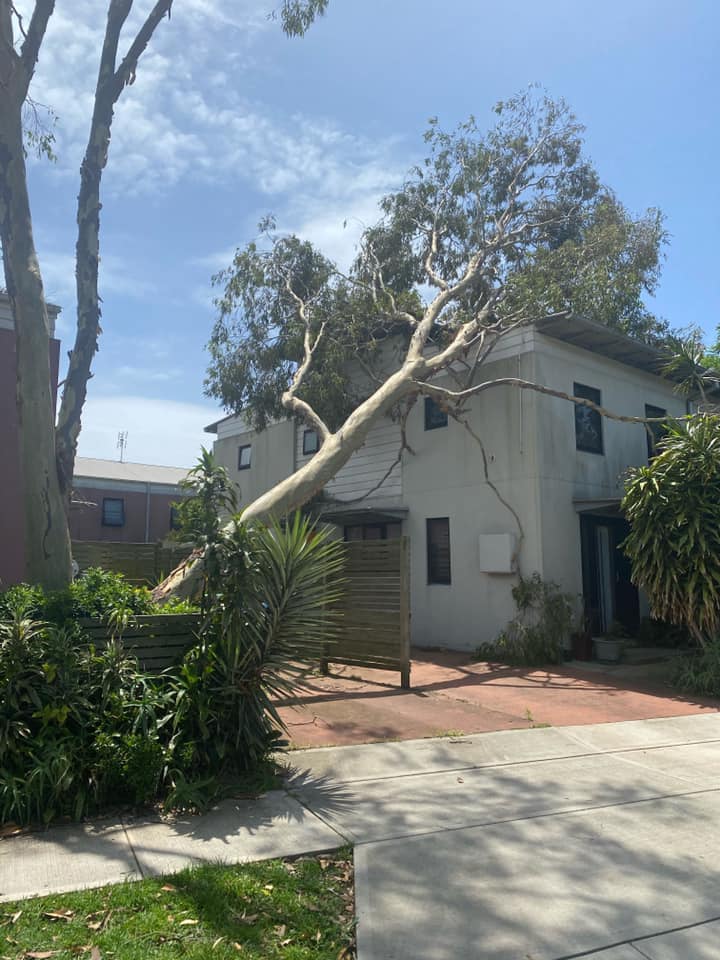
Addressing Dangerous Trees: When Immediate Action is Required
If you suspect that a neighbour’s tree poses a genuine risk of falling and causing injury or significant damage, do not hesitate to take action. Follow these steps without delay:
- Document the tree immediately by taking photographs — capture everything visible
- Send a written notification to your neighbour clearly outlining the perceived risk. This ensures there is a record that they have been informed.
- Contact your council’s compliance team — councils have the authority to issue orders for privately owned trees in certain circumstances where public safety is at risk
- If you believe the risk is imminent, reach out to NSW Police or your council’s emergency contact line
A written arborist assessment that clearly establishes the risk, delivered to your neighbour, often suffices to prompt action without necessitating formal proceedings.
Navigating Tree Disputes Involving Rental Properties
Tree disputes can become more complex when a rental property is involved. Here is how each situation typically unfolds.
What Should You Do If the Tree is on the Rental Property and Your Neighbour Complains?
If a neighbour raises concerns about a tree located on your rental property — the protocol is straightforward:
You do not have the authority to make decisions regarding trees on a property you rent. That responsibility lies with the landlord.
- Avoid agreeing to anything, making promises, or organising any work on the tree
- Calmly inform your neighbour that you are a tenant and do not have the authority to manage tree-related issues
- Immediately report the complaint to your property manager in writing — using email is ideal as it creates a dated record
- Include your neighbour’s contact details, the nature of the complaint, and any relevant photographs
- Follow up if you do not receive a timely response — particularly if safety concerns are involved
You are not liable for the tree. However, if you are aware of a complaint or safety risk and do not report it, your position may become precarious. Promptly reporting it in writing fulfills your obligation.
What Should You Do If the Problematic Tree is on a Neighbouring Rental Property?
Do not waste time discussing the matter with the tenant next door; they lack the authority to address tree issues.
- Identify the property manager and contact them in writing, including photographs and a description of the issue
- If you cannot locate the property manager, a title search through the NSW Land Registry will provide you with the landlord’s contact details for direct communication
- Property managers are required to promptly relay safety and damage complaints to the landlord. Follow up in writing if you do not receive a timely response and keep a record of every attempt
- If neither the property manager nor the landlord responds to documented safety concerns, escalate the matter to NSW Fair Trading mediation or the Land and Environment Court
- The LEC does not look favourably upon landlords who have been notified in writing of a known risk and failed to act. Your documented attempts at contact become crucial evidence.
What Responsibilities Do You Have as the Landlord?
As the landlord, you are responsible for managing the trees on your investment property, rather than your tenant or property manager.
- If your property manager has notified you of a tree complaint or safety issue and you fail to act, you expose yourself to liability
- Commission an arborist assessment promptly once a risk is raised — this establishes the facts objectively and demonstrates your commitment to addressing the issue
- Do not solely rely on your property manager’s judgement regarding tree safety. Seek an independent arborist opinion.
Frequently Asked Questions Regarding Tree Disputes
Q: Who is liable for damages caused by my neighbour’s tree to my fence?
A: This depends on whether negligence can be established. If your neighbour was aware of the risk and failed to take appropriate action, they may be held liable. Conversely, if the failure was unforeseen, typically, each party bears their own costs. A written arborist assessment establishing that the risk was known and communicated serves as key evidence in any negligence claim.
Q: Is legal representation necessary to pursue a tree dispute in the Land and Environment Court?
A: No — the LEC Class 2 jurisdiction is designed to be accessible for individuals without legal representation, and many individuals successfully represent themselves. However, for cases involving significant damage, injury, or complex heritage issues, seeking legal advice before filing is advisable.
Q: Can my neighbour prevent me from trimming branches that extend over my property line?
A: No — your common law right to trim back to the boundary is well established. However, you must avoid causing unnecessary damage to the tree, cannot access their property without permission, and should verify if the tree is protected under a local Tree Preservation Order before proceeding with any cuts.
Q: Are roots damaging my pipes or foundations covered under the Trees Act?
A: Yes. Damage caused by roots to underground pipes, foundations, and structures falls within the scope of the Act. Obtain a report from a plumber or builder confirming that the roots are the cause, along with an arborist assessment — together, these documents create a strong case.
Q: What steps should I take if my neighbour ignores my written notification about a dangerous tree?
A: Their lack of action after receiving your written notification significantly strengthens your position — both for an LEC application and for any future negligence claim if the tree causes damage or injury. Keep all correspondence and escalate to NSW Fair Trading mediation or the LEC if they remain unresponsive.
Connect with Our Knowledgeable Arborists for Support Today
Are you facing a dispute with a neighbour regarding a tree?
Obtaining an independent arborist assessment is often the most effective first step; it provides both parties with objective information and establishes a written record of any identified risks.
Waratah Professional Tree Care offers onsite consultations starting at $110 for assessments of up to three trees in Newcastle, Lake Macquarie, Maitland, and Port Stephens.
Feel free to contact us at 0414 706 653 or book an appointment online.
What to Do If a Tree Is Causing a Dispute With Your Neighbour in NSW
The Article: What to Do If a Tree Is Causing a Dispute With Your Neighbour in NSW first appeared on https://writebuff.com
The Article Tree Dispute Solutions with Neighbours in NSW Was Found On https://limitsofstrategy.com


No responses yet